Designing small actions
that lead to real behavior change
Designing small actions
that lead to real behavior change
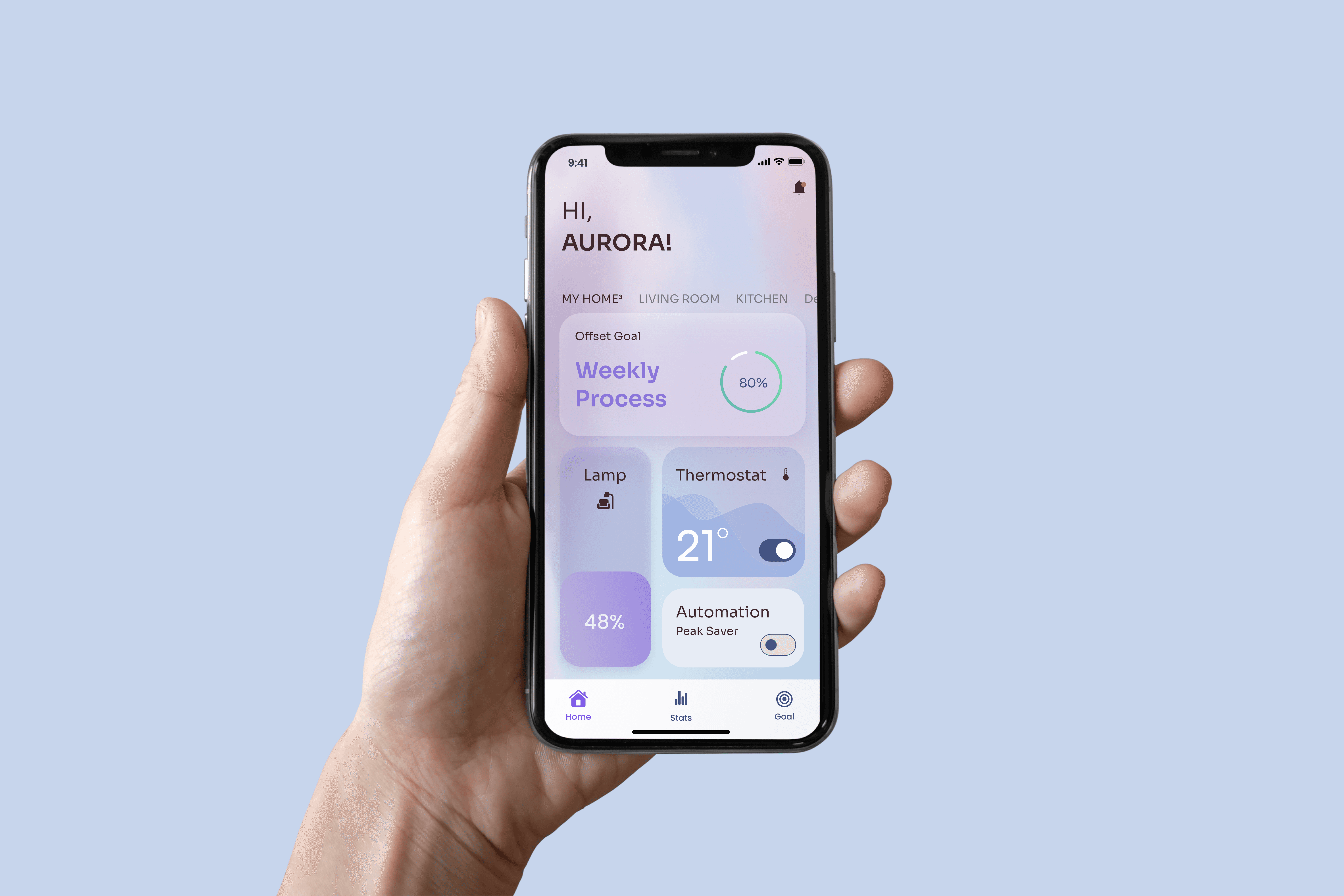
Designed an iOS smart home app to reduce friction and
build energy-saving habits through behavior-driven flows and usability testing.
Role
Role
UX Strategy · Research· Competitor Analysis Wireframes UI Design · Prototyping · Testing
Tools
Tools
Figma · Framer · Apple HIG · Accessibility
Type
Type
IOS Smart Home
IoT Mobile App
Timeframe
Timeframe
2024 (12 weeks)
Designing small actions
that lead to real behavior change
Designed an iOS smart home app to reduce friction and
build energy-saving habits through behavior-driven flows and usability testing.
Role
UX Strategy · Research· Competitor Analysis Wireframes UI Design · Prototyping · Testing
Tools
Figma · Framer · Apple HIG · Accessibility
Type
IOS Smart Home
IoT Mobile App
Timeframe
2024 (12 weeks)
Project Overview
Project Overview
Most people want to save energy.
But good intentions don’t always turn into action.
This project started from a personal observation, then shaped through behavior research, data, and system design.
I led an end-to-end process from research to interface design, building behavior-driven flows and validating them through testing until even a single tap felt meaningful.
It wasn’t about adding more features.
It was about helping users build better habits.
one small action at a time.
Most people want to save energy.
But good intentions don’t always turn into action. So I asked: Could design make small energy choices feel rewarding, and worth returning to?
I led a full end-to-end process from research to interface to behaviour-driven flows, and tested ideas until even one tap felt meaningful.
This project wasn’t about building features.
It was about helping people build better habits; One small action at a time.
Most people want to save energy.
But good intentions don’t always turn into action.
This project started from a personal observation, then shaped through behavior research, data, and system design.
I led an end-to-end process from research to interface design, building behavior-driven flows and validating them through testing until even a single tap felt meaningful.
It wasn’t about adding more features.
It was about helping users build better habits.
one small action at a time.
User Testing
User Testing
96%
96%
96%
Completed Key Flows
Estimated
Estimated
2.4Tons
2.4Tons
2.4Tons
CO₂ Saved Per Household
CO₂ Saved Per Household
User Engagement
User Engagement
85%
85%
85%
Feel Intuitive During Testing
Feel Intuitive During Testing
Strategy Change
Strategy Change
2 Times
2 Times
2 Times
Based On Testing Feedback
Based On Testing Feedback
Problem Framing
Problem Framing
The energy is visible,the impact isn’t.
The energy is visible,the impact isn’t.
Per household use
Per household use
11,305 kwh
11,305 kwh
In Canada
In Canada
Equal to
Equal to
63
63
Trees need to offset
Trees need to offset
Problem Framing
The energy is visible,the impact isn’t.
Per household use
11,305 kwh
In Canada
Equal to
63
Trees need to offset

Synthesized from industry report, user interviews,
public reviews, and competitive analysis
People don’t lack information.
They lack a reason to act.
01
Market
Energy apps scale data collection,
but fail to drive daily behavior.
02
Users
Users don’t feel their actions
create meaningful impact.
"It’s not like social apps. Nothing makes me want to come back."
03
Competitors
Most competitors optimize dashboards,
not behavior change.
"It’s not like social apps. There’s nothing that makes me want to come back."
So I designed for behavior.
Not features.
Synthesized from industry report, user interviews,
public reviews, and competitive analysis
People don’t lack information.
They lack a reason to act.
01
Market
Energy apps scale data collection,
but fail to drive daily behavior.
02
Users
Users don’t feel their actions
create meaningful impact.
"It’s not like social apps. Nothing makes me want to come back."
03
Competitors
Most competitors optimize dashboards,
not behavior change.
"It’s not like social apps. There’s nothing that makes me want to come back."
So I designed for behavior.
Not features.
Rapid Design Sprint to Test
Users completed tasks, but didn’t return without a clear reason
6 users joined a quick test session
30 minutes each
3 core tasks:
Setup a device → Check carbon impact → Set a weekly goal
Focus:
Can the UI trigger action,not just finish flows?
Outcome:
Tasks completed, no return intent observed
Rapid Design Sprint
Users completed tasks, but didn’t return without a clear reason
6 users joined a quick test session
30 minutes each
3 core tasks:
Setup a device → Check carbon impact → Set a weekly goal
Focus:
Can the UI trigger action,not just finish flows?
Outcome:
Tasks completed, no return intent observed
The Real Challenge
The Real Challenge
From Clean UI to Behavior-Driven Thinking
From Clean UI to
Behavior-Driven Thinking
“It looks nice, but I don’t know why I’d use it.”
“There’s no reason to come back.”
“It looks nice, but I don’t know why I’d use it.”
“There’s no reason to come back.”
Testing revealed a deeper issue:
Testing revealed a deeper issue:
What actually drives users to take action?
What actually drives users to take action?
This reframed the design direction.
So I redesigned my approach.
Keep Rethinking
Studied behavior models, iOS HIG, and accessibility guidelines

Zoom into Action
Focused on micro-interactions that feel emotionally rewarding

Build, Test, Learn
Ran mini research and rapid testing to iterate quickly

Seek Outside
When users weren’t available, I used Reddit, reviews, and mentor input

Keep Rethinking
Studied behavior models, iOS HIG, and accessibility guidelines
Zoom into Action
Focused on micro-interactions that feel emotionally rewarding
Build, Test, Learn
Ran mini research and rapid testing to iterate quickly
Seek Outside
When users weren’t available, I used Reddit, reviews, and mentor input
This shift helped me design not just UI — but decisions.
Because real behaviour change starts with one meaningful tap.
This shift helped me design not just UI, but decisions.
Because real behaviour change starts with one meaningful tap.
From Research to Design Decisions
From Research to Design Decisions
From Research to Design Decisions
Rapid testing
Initial Direction: Design Sprint
Initial Direction: Design Sprint
I ran a 5-day Design Sprint to test my first idea fast:
a clean interface that simplified control and tracking.
3 users joined a quick test session
30 minutes each
3 core tasks:
Setup a device → Check carbon impact → Set a weekly goal
3 core tasks:
Setup a device → Check carbon impact → Set a weekly goal
Focus:
Can the UI trigger action,not just finish flows?
The Real Challenge
The Real Challenge
From Clean UI to Behavior-Driven Thinking
From Clean UI to Behavior-Driven Thinking
My first version looked polished — a smart home concept with visual clarity and modern UX. But testing revealed a deeper issue:
“It looks nice, but I don’t know why I’d use it.”
“There’s no reason to come back.”
Then, I paused
Then, I paused
Instead of designing more, I started asking:
What actually drives users to act?
What actually drives users to act?
That question changed everything.
So I redesigned my approach
So I redesigned my approach
Keep Rethinking
Keep Rethinking
Studied behavior models, iOS HIG, and accessibility guidelines
Zoom into Action
Zoom into Action
Focused on micro-interactions that feel emotionally rewarding
Build, Test, Learn
Build, Test, Learn
Ran mini research and rapid testing to iterate quickly
Seek Outside
Seek Outside
When users weren’t available, I used Reddit, reviews, and mentor input
This shift helped me design not just UI — but decisions.
Because real behaviour change starts with one meaningful tap.
Competitive Analysis
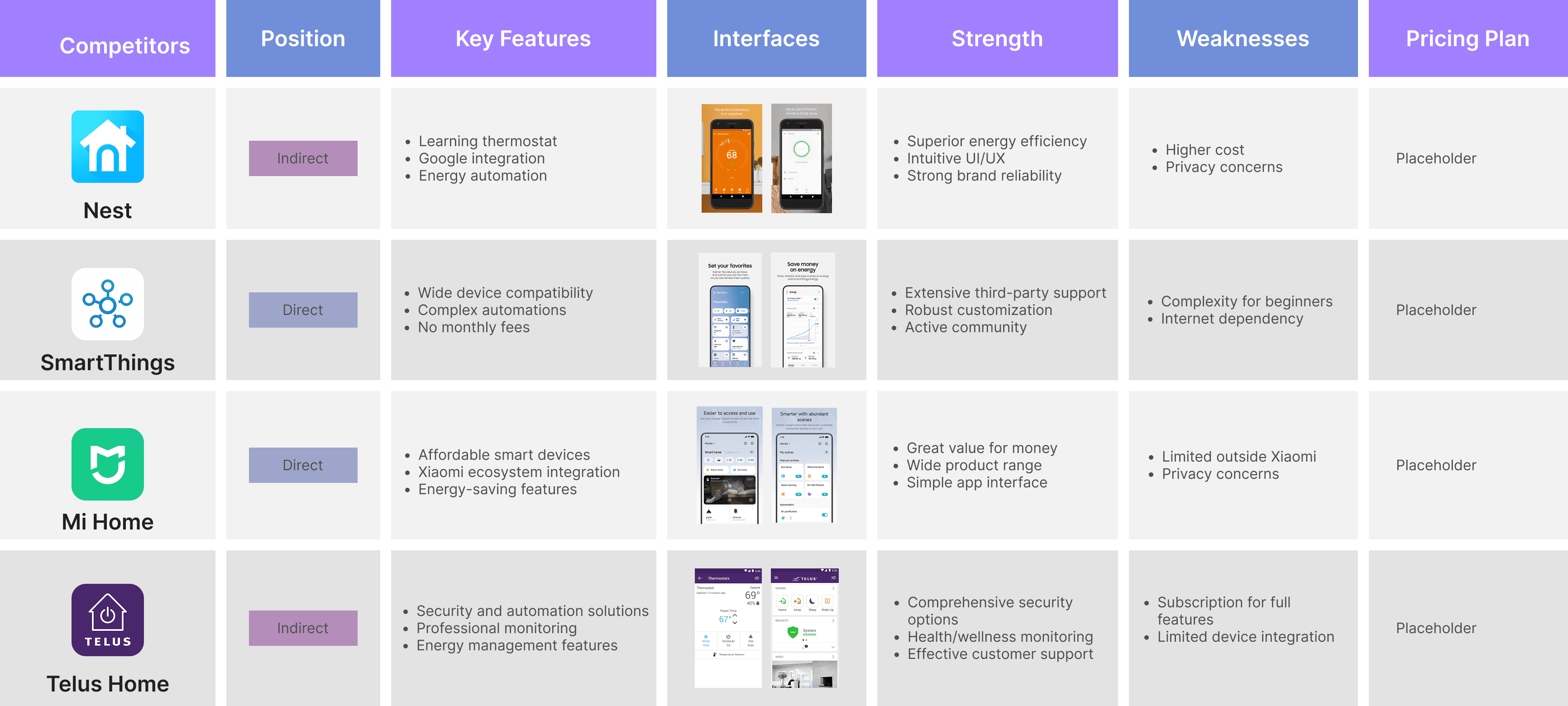
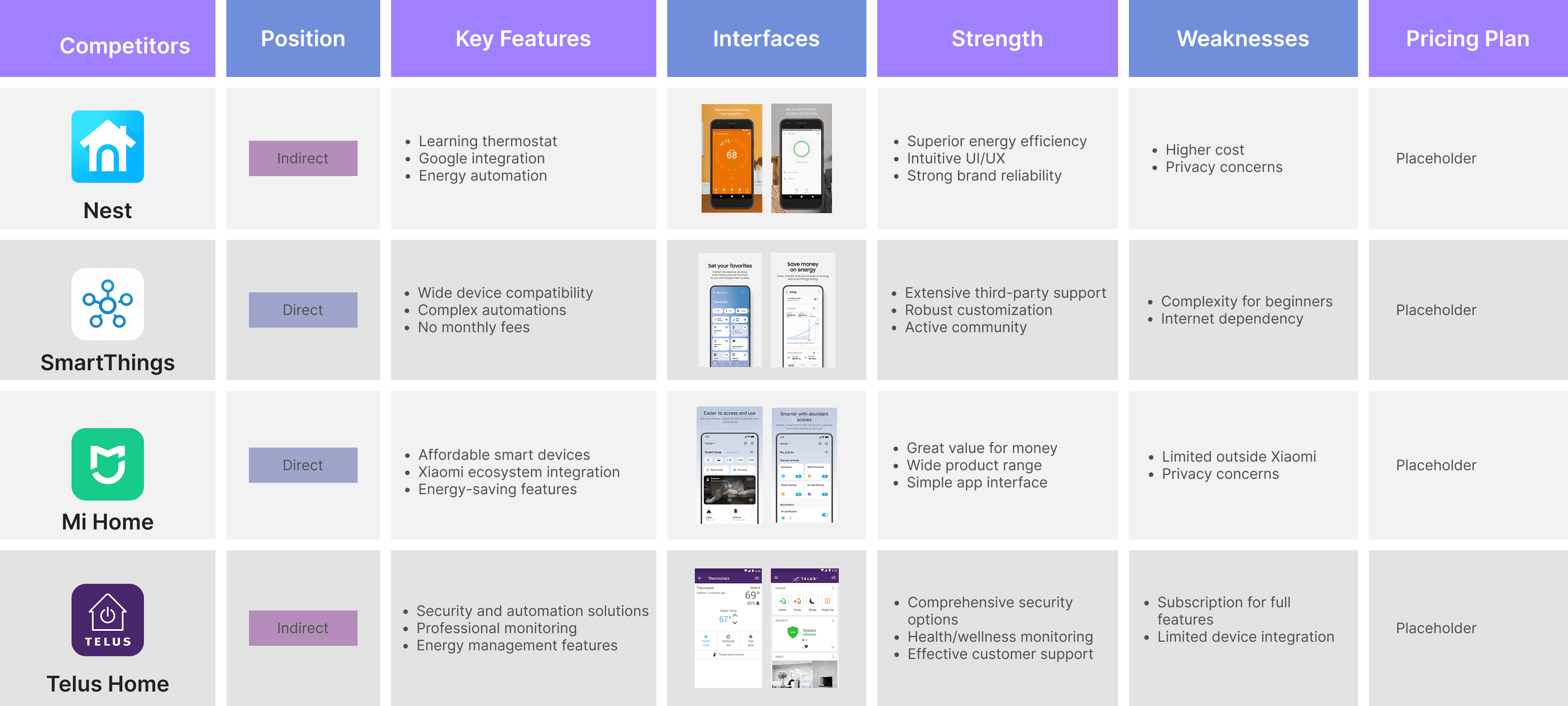
Compared 4 smart home apps to identify UX gaps that affect engagement and behavior.
Early Concepts
User Validation
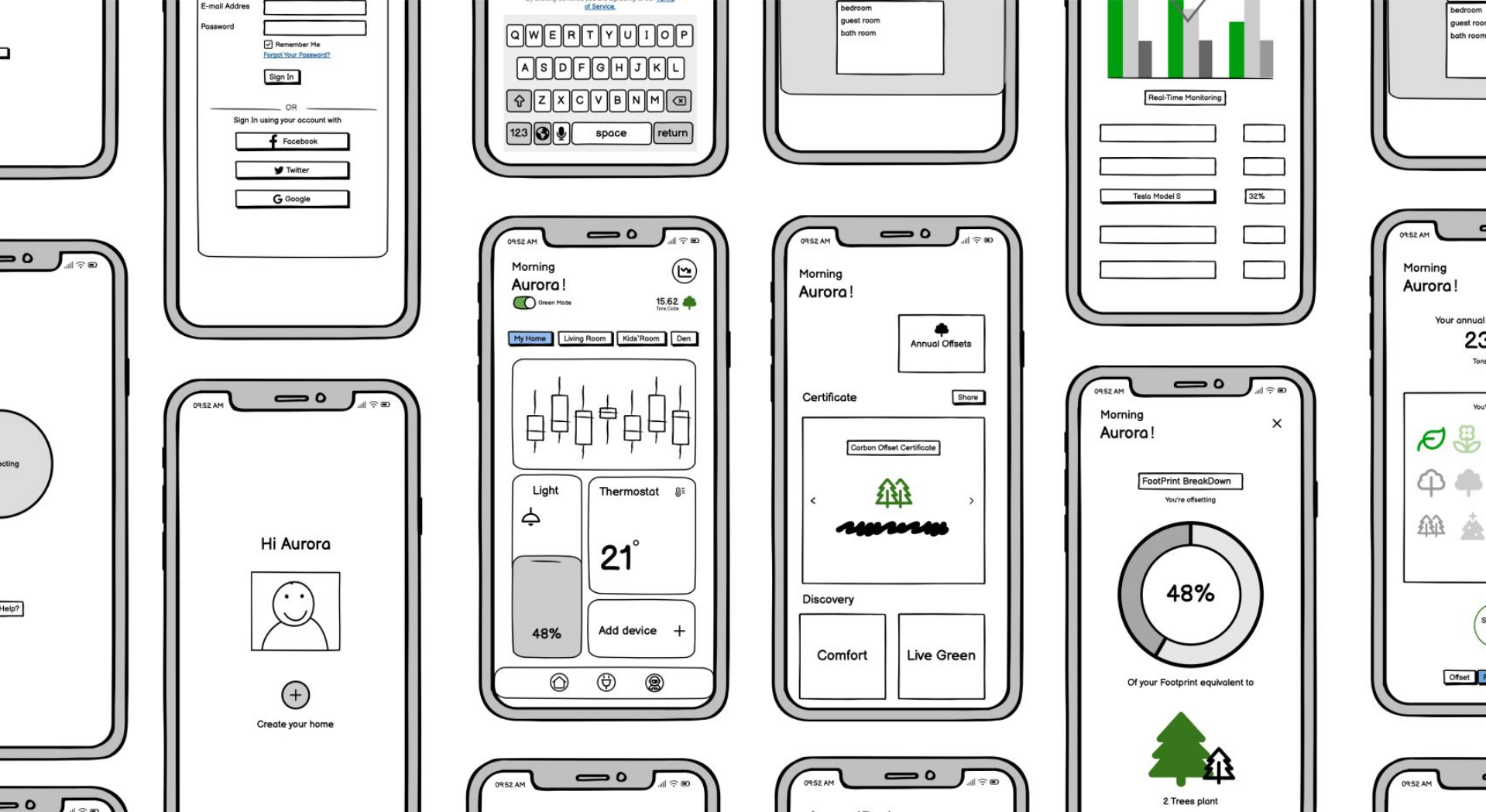
Tested low-fidelity flows with users and iterated through three versions based on real reactions.
Design System
Handoff Readiness
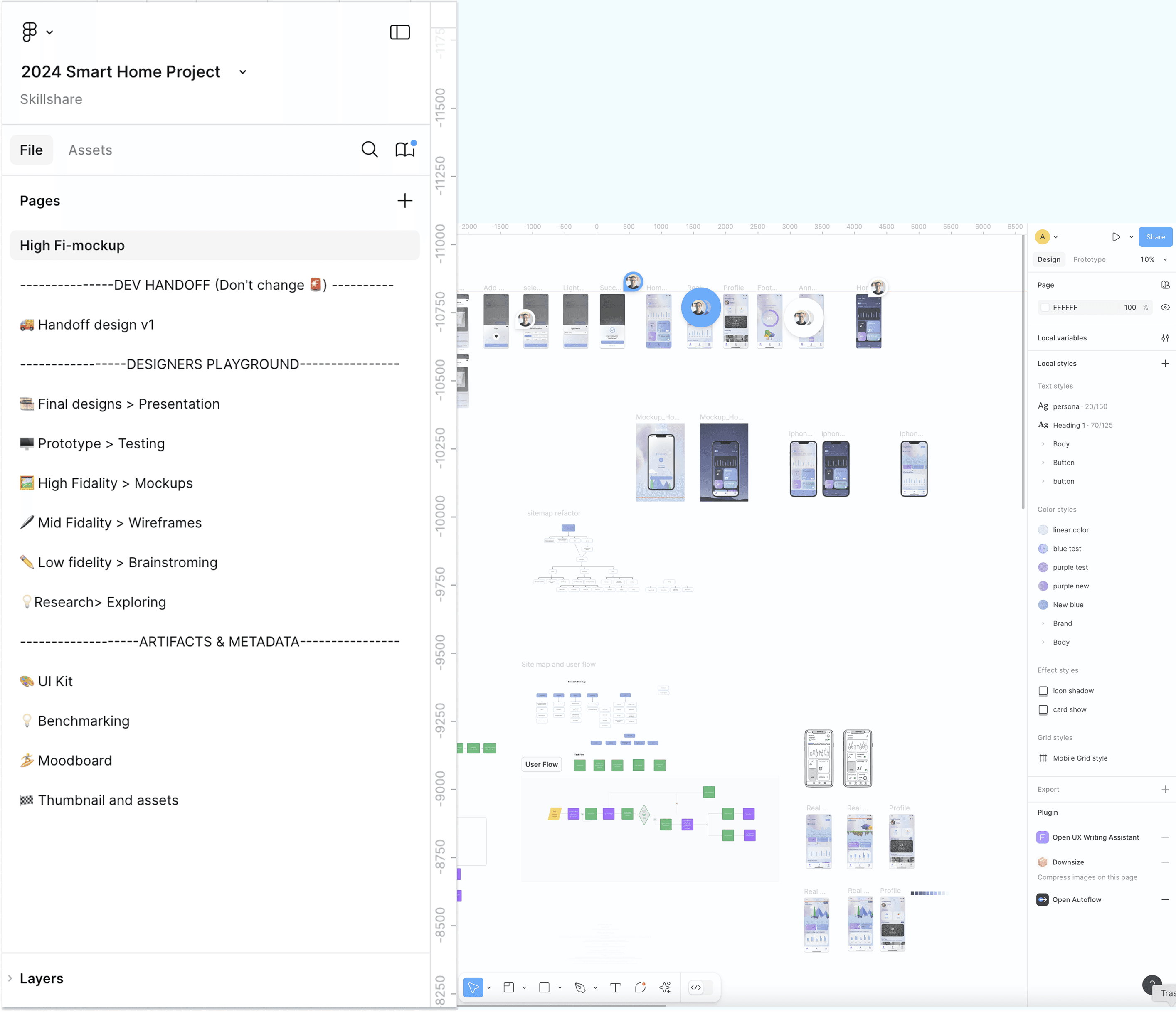
Organized files, components, and decisions to support iteration and developer handoff.
Designing for Behavior Change
Designing for Behavior Change
Designing for Behavior Change
Rapid testing
Rapid testing
Initial Direction: Design Sprint
Initial Direction: Design Sprint
I ran a 5-day Design Sprint to test my first idea fast:
a clean interface that simplified control and tracking.
I ran a 5-day Design Sprint to test my first idea fast:
a clean interface that simplified control and tracking.
3 users joined a quick test session
3 users joined a quick test session
30 minutes each
30 minutes each
3 core tasks:
Setup a device → Check carbon impact → Set a weekly goal
3 core tasks:
Setup a device → Check carbon impact → Set a weekly goal
Focus:
Can the UI trigger action,not just finish flows?
Focus:
Can the UI trigger action,not just finish flows?
The Real Challenge
The Real Challenge
From Clean UI to Behavior-Driven Thinking
From Clean UI to Behavior-Driven Thinking
My first version looked polished — a smart home concept with visual clarity and modern UX. But testing revealed a deeper issue:
My first version looked polished — a smart home concept with visual clarity and modern UX. But testing revealed a deeper issue:
“It looks nice, but I don’t know why I’d use it.”
“There’s no reason to come back.”
“It looks nice, but I don’t know why I’d use it.”
“There’s no reason to come back.”
Then, I paused
Then, I paused
Instead of designing more, I started asking:
Instead of designing more, I started asking:
What actually drives users to act?
What actually drives users to act?
That question changed everything.
That question changed everything.
So I redesigned my approach
So I redesigned my approach
Keep Rethinking
Keep Rethinking
Studied behavior models, iOS HIG, and accessibility guidelines
Studied behavior models, iOS HIG, and accessibility guidelines
Zoom into Action
Zoom into Action
Focused on micro-interactions that feel emotionally rewarding
Focused on micro-interactions that feel emotionally rewarding
Build, Test, Learn
Build, Test, Learn
Ran mini research and rapid testing to iterate quickly
Ran mini research and rapid testing to iterate quickly
Seek Outside
Seek Outside
When users weren’t available, I used Reddit, reviews, and mentor input
This shift helped me design not just UI — but decisions.
Because real behaviour change starts with one meaningful tap.
Designing For
Behavior, Not For Screens
Designing For
Behavior, Not For Screens
Designing For
Behavior, Not For Screens
Make energy savings emotionally visible
Reduce friction for real action
Keep interactions simple and intentional
After rounds of usability testing and expert feedback,
I refined the design around 3 key principles: Make energy feel emotionally rewarding; Reduce friction for real action; Keep it intuitive and minimal
I refined the design around 3 key principles:
Make energy feel emotionally rewarding; Reduce friction
for real action; Keep it intuitive and minimal.
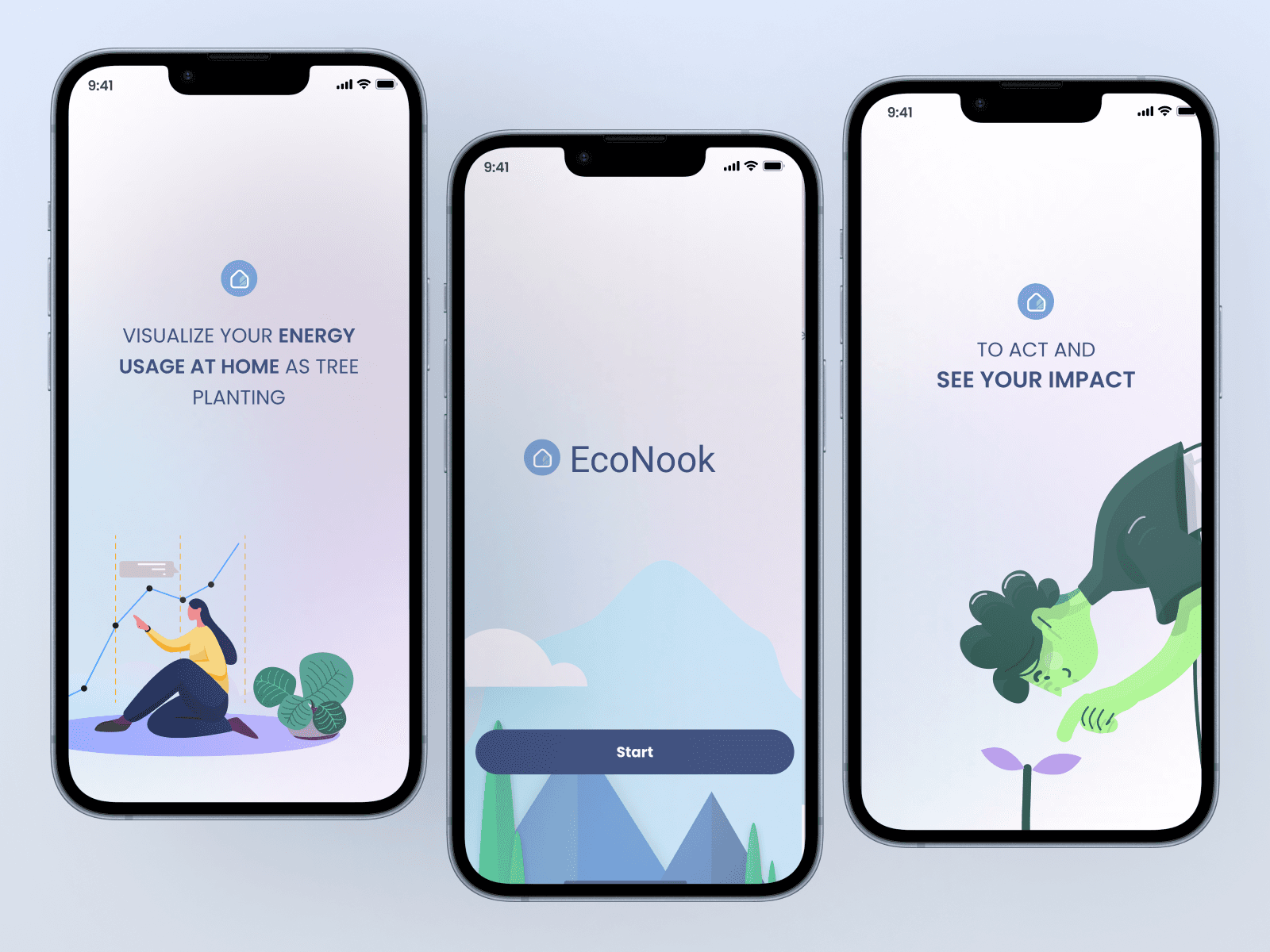
Features were evaluated by whether they triggered action, not by how advanced they looked.
Some features tested well.
I still cut them. Because they didn’t change behavior.
Feature Prioritization
Based on Behavior Impact
Feature Prioritization
Based on Behavior Impact
Loading...
Making Energy
Savings Visible
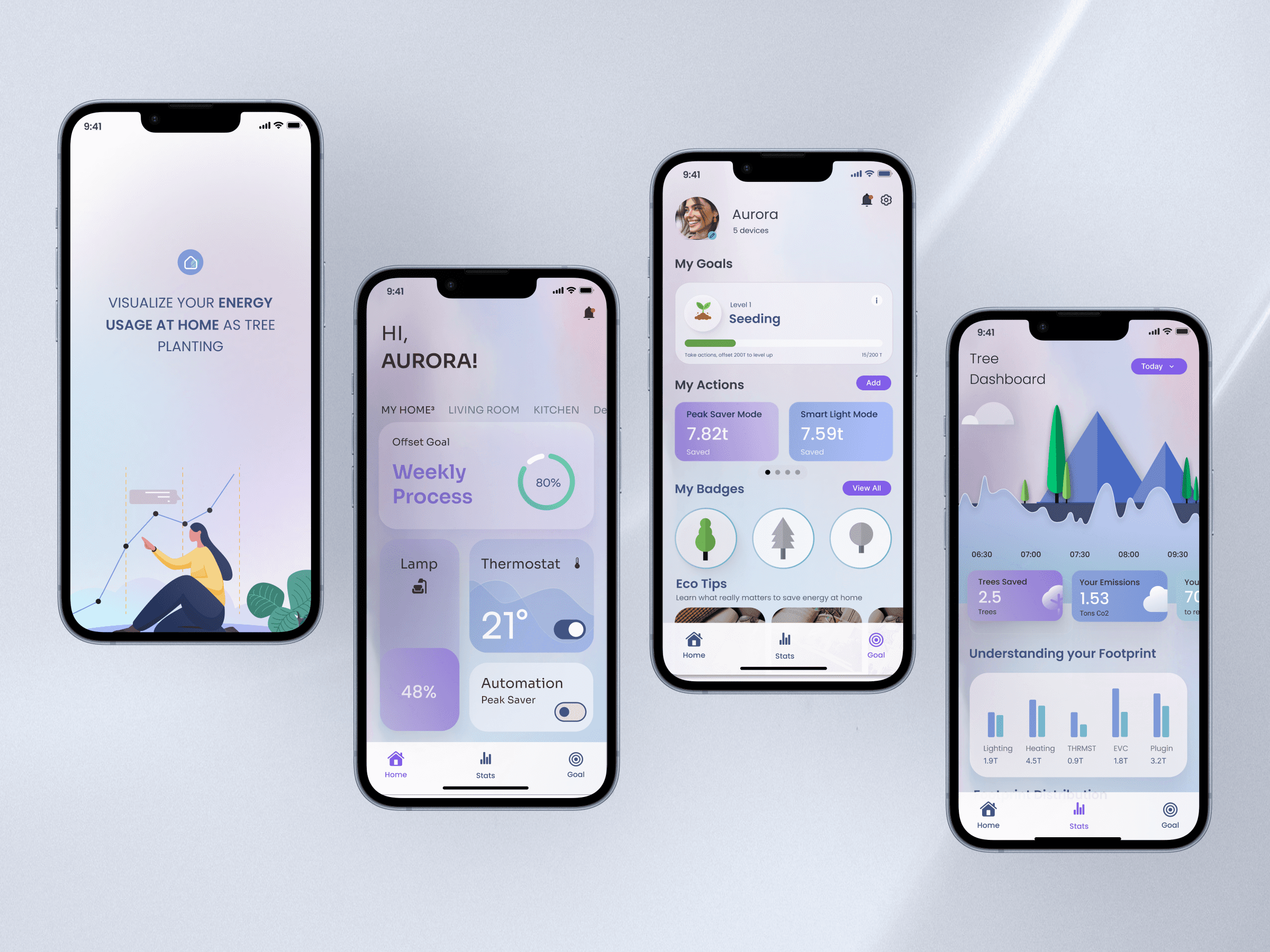
Energy reduction is visualized as tree growth with one auto-tracked weekly goal.
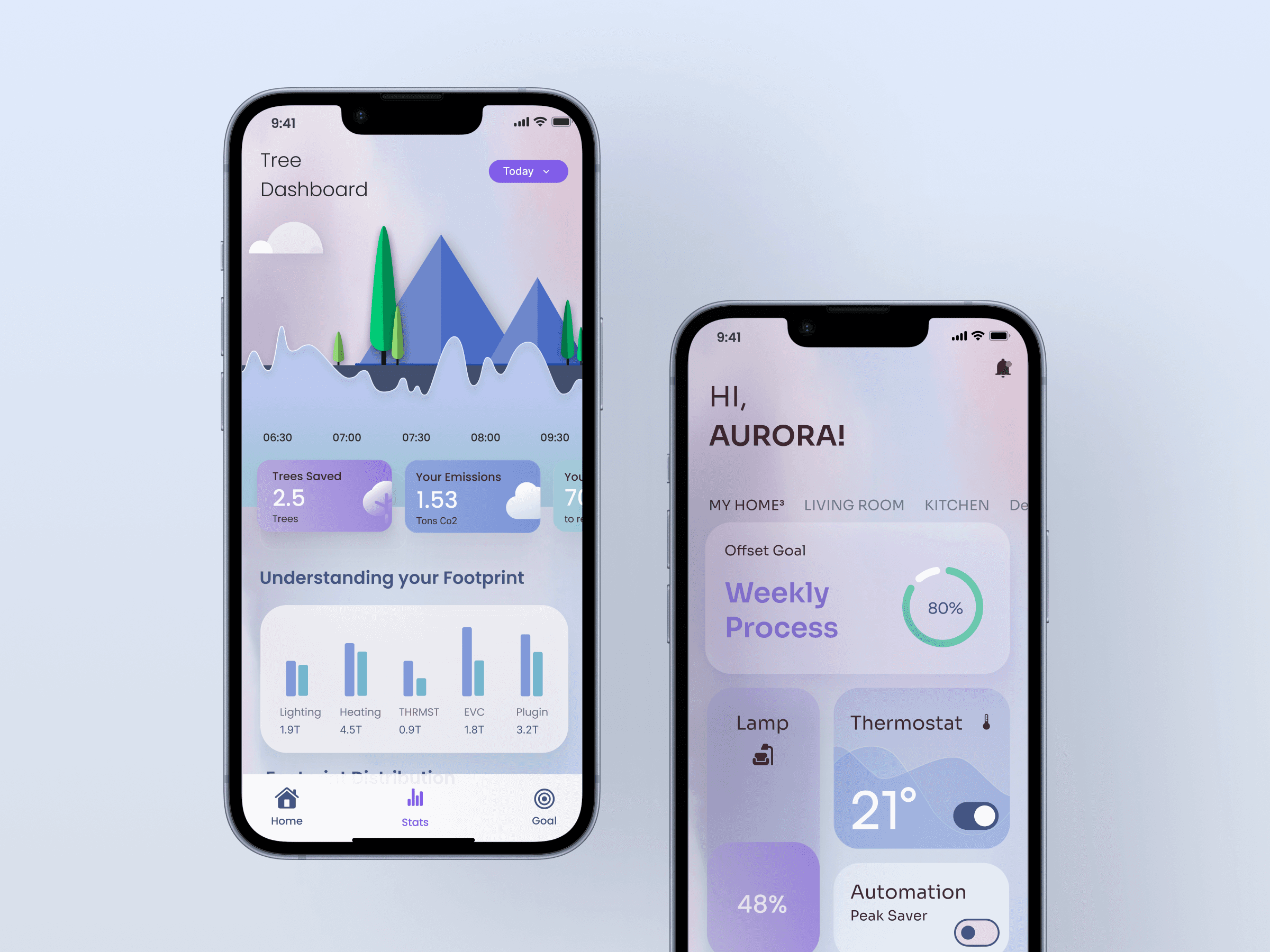
Make Impact Visible
Reduce thinking
Energy reduction is visualized as tree growth with one auto-tracked weekly goal.
Gamification as Motivation, Not Distraction
Motivate users to reduce their carbon footprint at home by turning the process into virtual tree planting.
Motivate users to reduce their carbon footprint at home by turning the process into virtual tree planting.
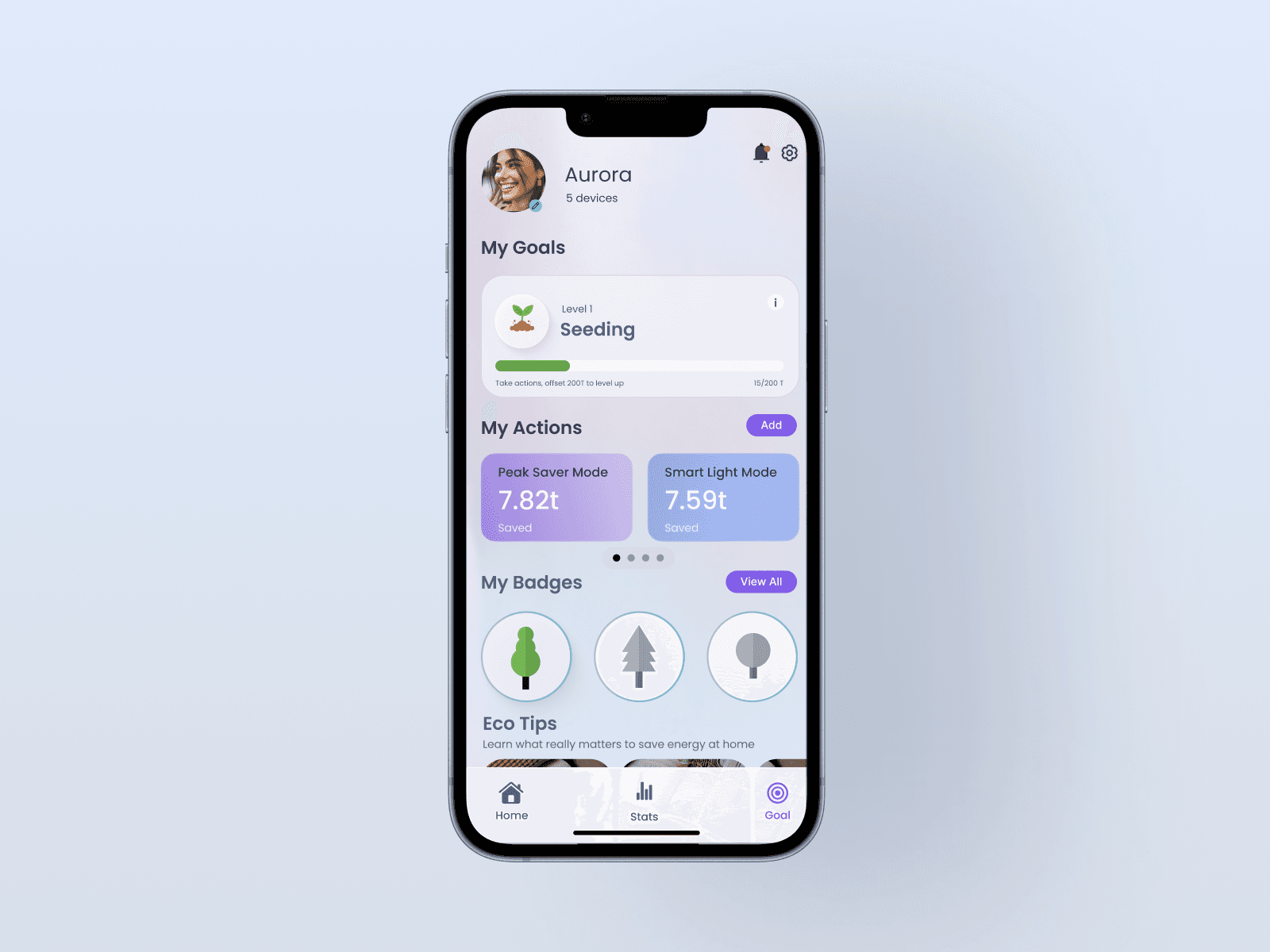
From Momentum
To Habit Under 10 Seconds
From Momentum
To Habit Under 10 Seconds
Trigger: Peak-hour notification
Action: One-tap activation
Reward: Immediate visual progress
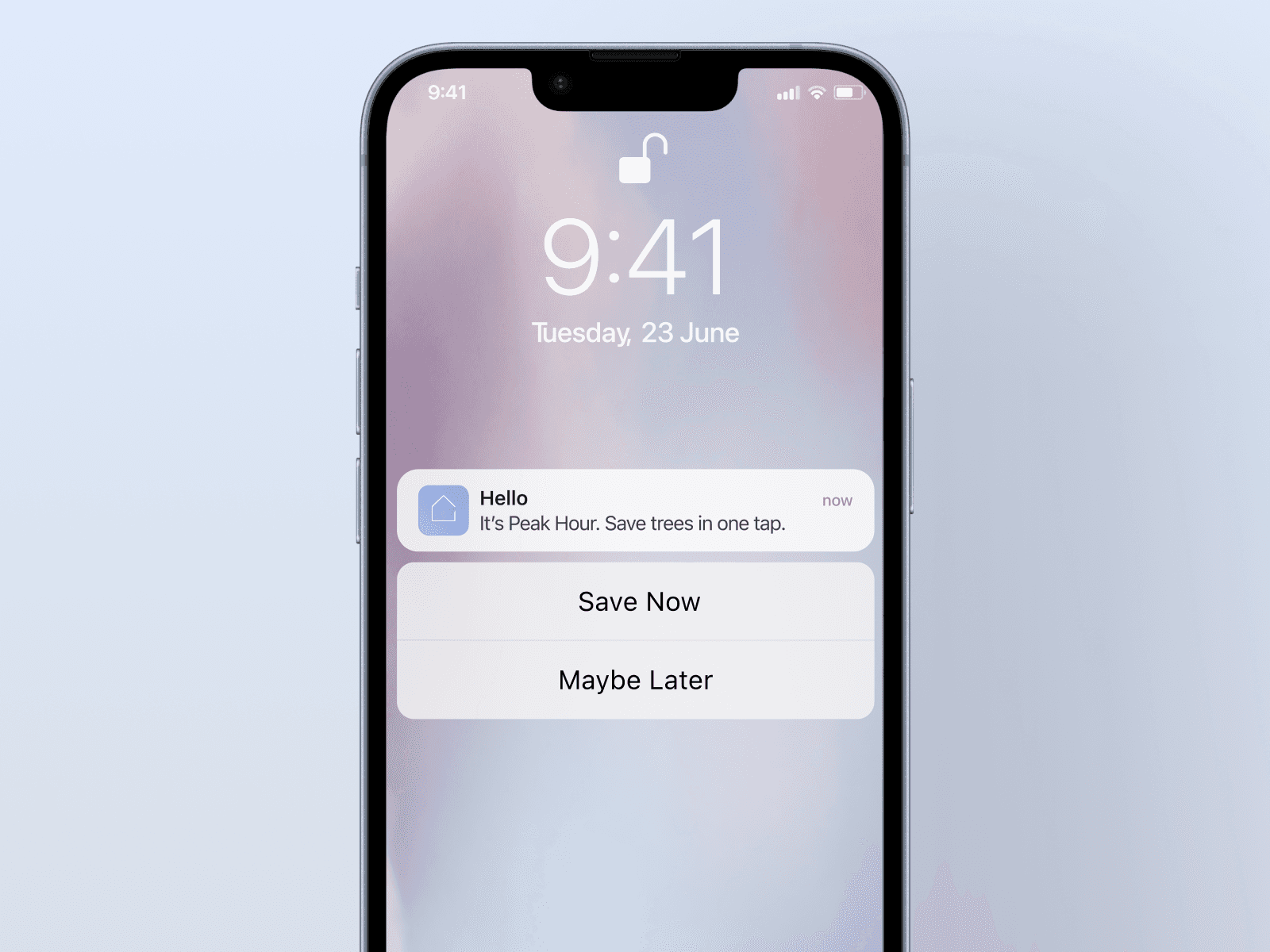
01
Trigger
Trigger
Push Notification appears
"It's Peak Hour. Save trees in one tap."
Push Notification appears "It's Peak Hour. Save trees in one tap."
02
Engage
Engage
User taps→App opens→Notification screen loads
User taps→App opens→Notification screen loads
03
Understand
Understand
Why activate Peak Saver
“Save energy, plant virtual trees."
Why activate Peak Saver“Save energy, plant virtual trees."
04
Activate
Activate
User clicks “Activate Now”
User clicks “Activate Now”
05
Reward
Reward
Confirmation appears
“+1 tree saved” visible in dashboard
Confirmation appears
“+1 tree saved” visible in dashboard
From Momentum
To Habit Under 10 Seconds
Trigger: Peak-hour notification
Action: One-tap activation
Reward: Immediate visual progress
01
Trigger
Push Notification appears
"It's Peak Hour. Save trees in one tap."
02
Engage
User taps→App opens→Notification screen loads
03
Understand
Why activate Peak Saver
“Save energy, plant virtual trees."
04
Activate
User clicks “Activate Now”
05
Reward
Confirmation appears
“+1 tree saved” visible in dashboard
Final Reflection
Final Reflection
This project reinforced a core belief in my design approach:
behavior change doesn’t come from more features, but from clear triggers, simple actions, and visible progress.
By focusing on motivation, timing, and habit loops, I shifted the design from a polished concept to a system that encourages repeat action.
The question I continue to design with is simple: Would I come back to this? and why would a user?
This project reinforced a core belief in my design approach:
behavior change doesn’t come from more features, but from clear triggers, simple actions, and visible progress.
By focusing on motivation, timing, and habit loops, I shifted the design from a polished concept to a system that encourages repeat action.
The question I continue to design with is simple: Would I come back to this? and why would a user?
This project reinforced a core belief in my design approach:
behavior change doesn’t come from more features, but from clear triggers, simple actions, and visible progress.
By focusing on motivation, timing, and habit loops, I shifted the design from a polished concept to a system that encourages repeat action.
The question I continue to design with is simple: Would I come back to this? and why would a user?
Acknowledgements
Acknowledgements
Acknowledgements
Thanks to every mentor, instructor, and user who helped me test, rethink, and simplify.
And to Tree Canada, whose mission reminded me that even small habits can scale into something real.
Thanks to every mentor, instructor, and user who helped me test, rethink, and simplify.
And to Tree Canada, whose mission reminded me that even small habits can scale into something real.
Thanks to every mentor, instructor, and user who helped me test, rethink, and simplify.
And to Tree Canada, whose mission reminded me that even small habits can scale into something real.